
Intel E89459: The Unseen Engine of Legacy Server Platforms
In the vast ecosystem of data center hardware, the spotlight often falls on CPUs—the brains of the operation. Yet, for generations of now-retired server platforms, the true linchpin of stability and functionality was a far less celebrated component: the Intel E89459 memory controller hub (MCH), more commonly known by its codename, Tylersburg. This cornerstone chipset was the indispensable, unseen engine that powered the formidable Intel Xeon 5500 and 3500 series processors, heralding the transformative Nehalem microarchitecture.
The arrival of the Nehalem-based Xeons in 2008-2009 was a paradigm shift. It marked Intel's move away from the front-side bus (FSB) to a revolutionary QuickPath Interconnect (QPI). This point-to-point architecture demanded a new kind of chipset, a sophisticated traffic director capable of managing the immense data flow between multiple CPUs and their peripherals. The E89459 was designed explicitly for this role. It wasn't just a bridge; it was a high-speed nexus. Its primary function was to manage the high-bandwidth, low-latency QPI links between processors in a multi-socket configuration, a critical task that enabled seamless scalability and unlocked the potential for true performance parallelism in two-socket (and larger) systems.
Beyond its core QPI routing duties, the E89459 was a hub of critical I/O. It provided the interface for the main PCI Express 2.0 root ports, connecting high-performance add-in cards like RAID controllers and network adapters. It also managed the connection to the southbridge (ICH10), which handled legacy interfaces. For administrators, systems built on Tylersburg introduced game-changing features. Most notably, it was the foundation for Intel's first integrated memory controller within the CPU, but the MCH's role in multi-socket coherence was what made large, coherent memory pools possible. Furthermore, it brought advanced reliability, availability, and serviceability (RAS) features to the mainstream, solidifying its place in mission-critical environments.
Today, the E89459 is firmly in the legacy category, succeeded by numerous generations of integrated and more efficient architectures. However, its impact is undeniable. It was the hardware enabler for a decade of enterprise computing, forming the backbone of countless corporate data centers, research clusters, and private clouds. For many organizations, systems powered by this unseen engine remain in service, a testament to their robust and enduring design. The Intel E89459 wasn't just a component; it was the fundamental architecture upon which the modern multi-core, multi-socket server was built.
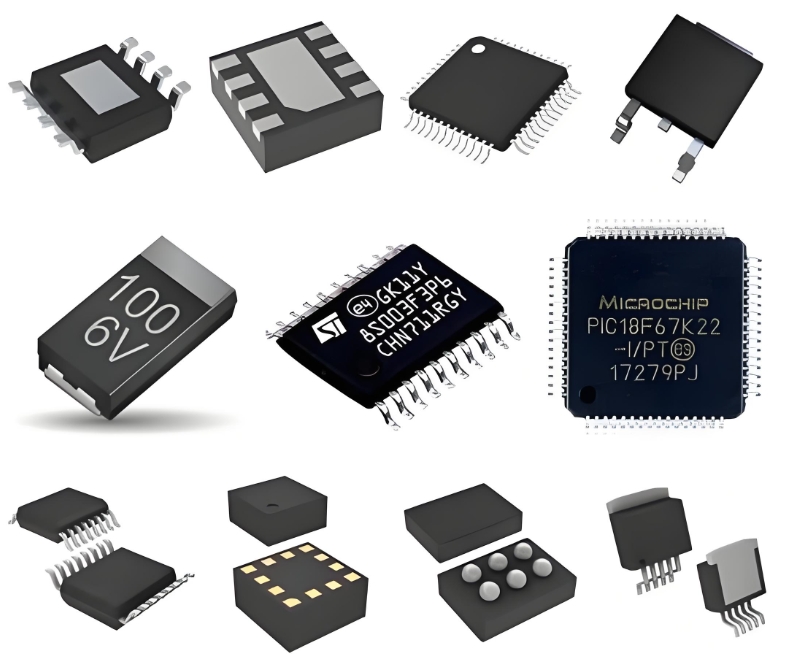
ICGOODFIND: The Intel E89459 (Tylersburg) was not merely a chipset but the foundational architecture that enabled the revolutionary Nehalem platform. By mastering the QuickPath Interconnect (QPI), it eliminated the front-side bus bottleneck, unlocked unprecedented multi-socket scalability, and served as the critical I/O hub for a generation of highly reliable and performant servers, leaving an indelible mark on data center history.
Keywords:
1. Intel E89459
2. Tylersburg
3. QuickPath Interconnect (QPI)
4. Nehalem Microarchitecture
5. Memory Controller Hub (MCH)

